
Browse by production process
Granulator models
9 models across 3 series
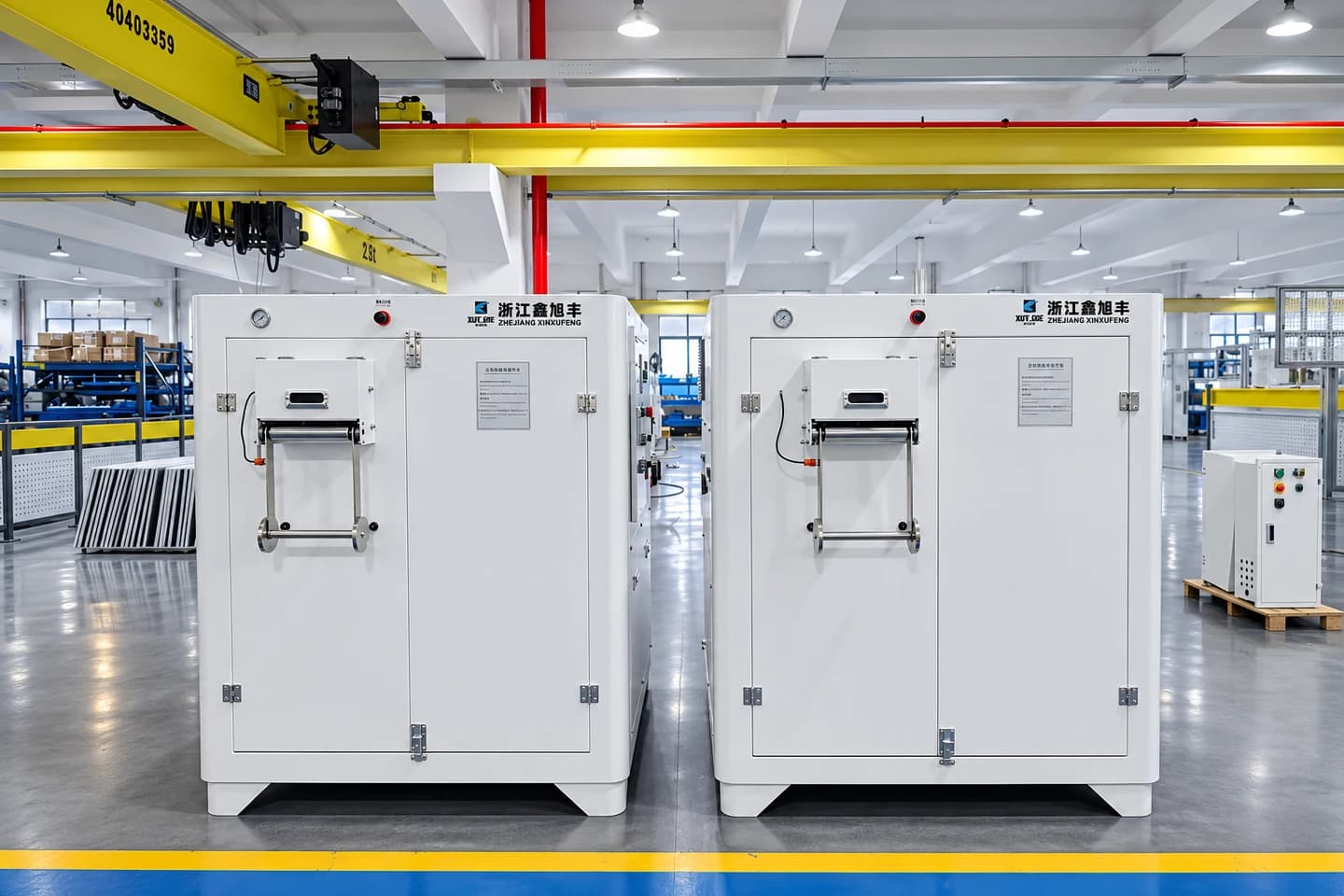
CXF · Thermoforming Inline Granulator
Recover skeletal web and rejected parts from plastic thermoforming.
Explore CXF SeriesCXF-850
Use the catalogue’s 830 mm infeed width as a starting point. Compare it with the widest flat web and the usable opening in the proposed guarded layout.
- Maximum infeed width
- 830 mm
- Main motor power
- 7.5 kW
- Catalogue throughput
- 300–400 kg/h
CXF-1000 · Dual Station
For a dual-station layout, measure the web and trim-exit position at each station and check them against the 980 mm catalogue infeed.
- Maximum infeed width
- 980 mm
- Main motor power
- 11 kW
- Catalogue throughput
- 300–500 kg/h
CXF-1200 · Dual Station
Review this 1,180 mm dual-station model for wider thermoforming web. Include peak scrap rates and the route from each trim exit in your brief.
- Maximum infeed width
- 1180 mm
- Main motor power
- 15 kW
- Catalogue throughput
- 600–800 kg/h
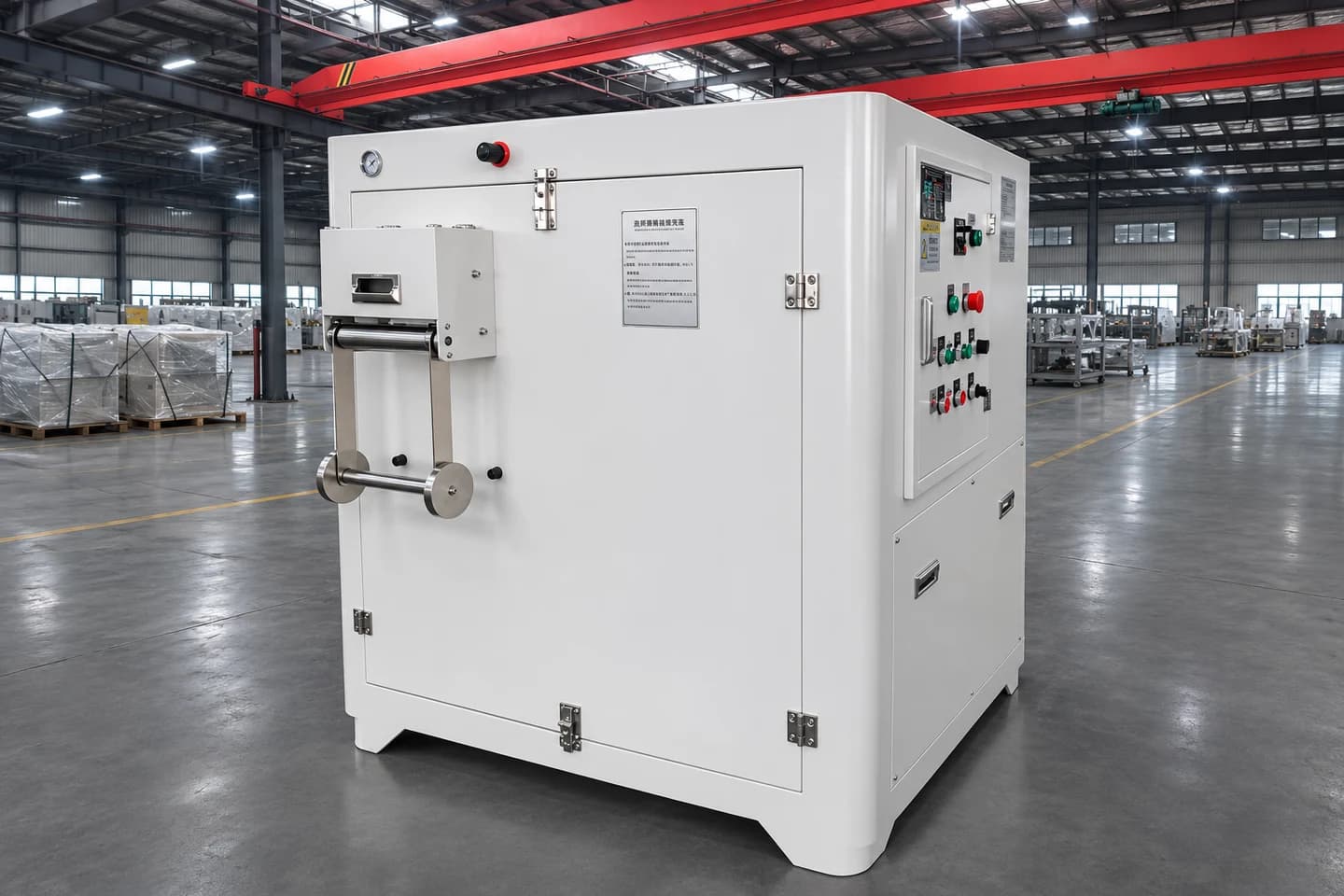
XF · Sheet Extrusion Edge Trim Granulator
Plan inline granulation of continuous edge trim from sheet extrusion.
Explore XF SeriesXF-300
Compare the 280 mm catalogue infeed with the full guided strip path. Confirm the required throughput at the highest planned line speed.
- Maximum infeed width
- 280 mm
- Main motor power
- 4 kW
- Catalogue throughput
- 150–200 kg/h
XF-350
Compare the 330 mm catalogue infeed with the strip route and maximum width. Include strip curl and the space needed for the guides.
- Maximum infeed width
- 330 mm
- Main motor power
- 5.5 kW
- Catalogue throughput
- 250–300 kg/h
XF-350 · Dual Station
Review this dual-station configuration when the trim routes need to be evaluated separately. Share dimensions and take-off positions for both strips.
- Maximum infeed width
- 330 mm
- Main motor power
- 7.5 kW
- Catalogue throughput
- 250–300 kg/h
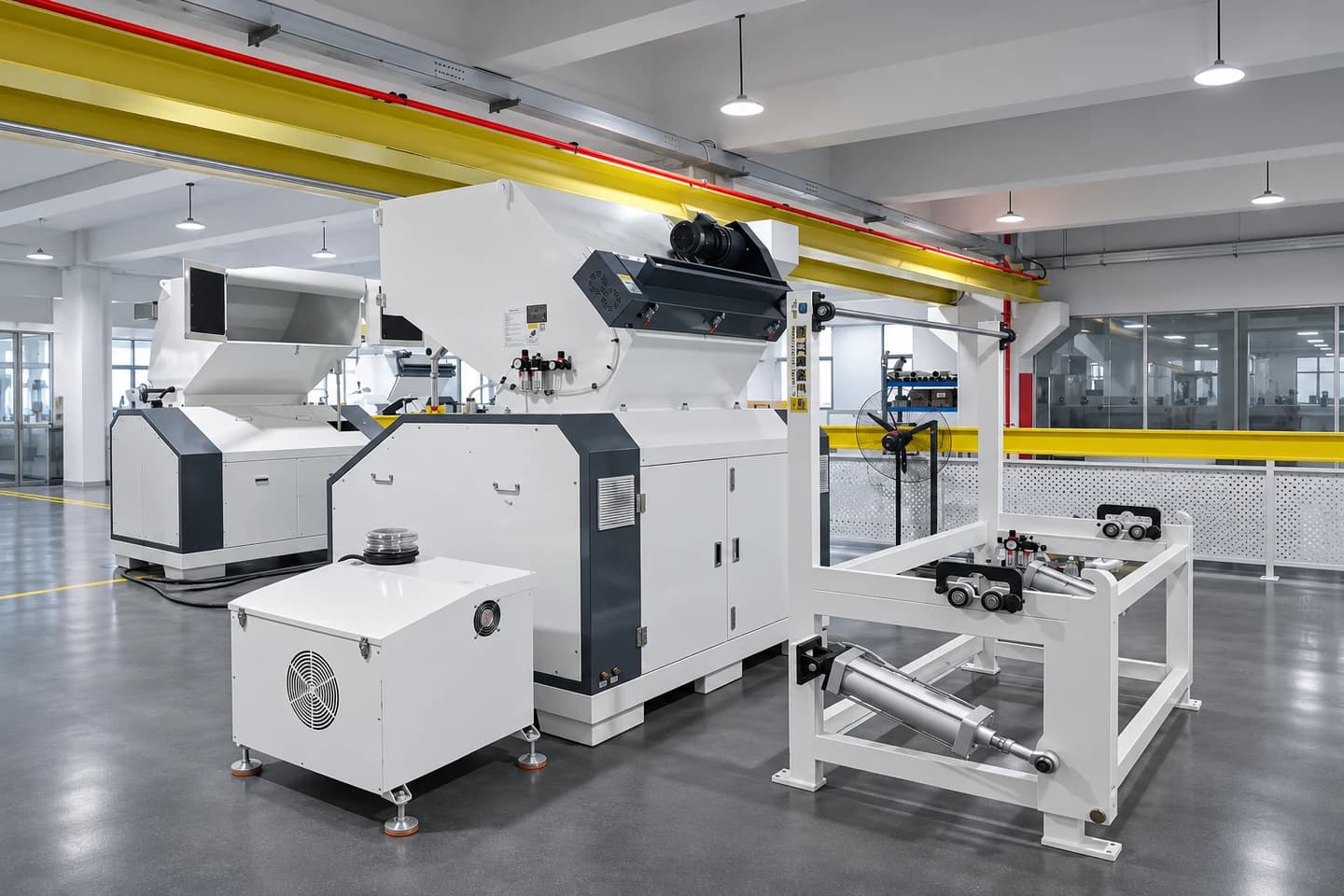
JXF · Heavy Duty Plastic Granulator
Match feed and discharge options to the scrap handled on your production floor.
Explore JXF SeriesJXF-1000
Check the largest roll or formed piece against the 980 mm catalogue infeed and confirm how it will be presented to the machine.
- Maximum infeed width
- 980 mm
- Main motor power
- 30 kW
- Catalogue throughput
- 1000–1500 kg/h
JXF-1200
Use the 1,180 mm catalogue infeed to shortlist the model. Then review each scrap stream’s peak load and available space for collection.
- Maximum infeed width
- 1180 mm
- Main motor power
- 45 kW
- Catalogue throughput
- 1500–2000 kg/h
JXF-1500
Review the 1,480 mm catalogue infeed against the largest scrap forms. Size the collection path for peak load as well as steady production.
- Maximum infeed width
- 1480 mm
- Main motor power
- 55 kW
- Catalogue throughput
- 2000–2500 kg/h
Series comparison
Match the granulator to the process
Check how scrap leaves your line and what you need to measure before sizing the equipment.
Scroll across to compare all three series.
| Selection factor | CXF · Thermoforming | XF · Sheet Extrusion | JXF · Mixed Production Scrap |
|---|---|---|---|
| Production process | Thermoforming and trim station | Sheet extrusion and edge trimming | Collection of scrap in different forms |
| Scrap form | Skeletal web and rejected parts | Continuous sheet edge trim | Roll stock, loose trim and formed scrap |
| How the material feeds | Inline skeletal web from the trim exit. Discuss loose rejects separately. | Continuous strips guided from the edge-trim take-off. | Feed arrangement for rolls or loose scrap. Discuss the discharge configuration. |
| Confirm before sizing | Maximum web width, sheet thickness, trim exit height and scrap rate. | Strip count, width and thickness for each strip, and line speed. | Largest scrap dimensions, required throughput and the collection method. |
Project preparation
Prepare a brief for equipment selection
- 01
Describe the production line
Send the polymer, scrap shape, dimensions and normal and peak scrap rates. A photo or sketch of the take-off and available space helps explain the layout.
- 02
Review feed and collection
Discuss where material leaves the line, how it should enter the granulator and how you plan to collect or reuse the regrind. Flag any controls, installation or service requirements in your brief.
- 03
Define the proposal scope
Use the selection discussion to identify the series, configuration, related equipment and support items to include in your quotation.
Frequently asked questions
What is the difference between CXF and XF?
CXF is for thermoforming skeletal web and rejected parts. XF is for continuous sheet extrusion edge trim. The process and scrap shape guide the equipment choice.
Which series should I discuss for roll stock and loose scrap?
Start with the JXF series when reviewing roll stock, loose trim and thermoformed scrap. Describe each feed form separately, including the largest dimensions, resin and required throughput. The JXF catalogue describes dual-infeed and A/B discharge arrangements; the configuration belongs in the project discussion.
What throughput should I plan for?
The CXF-850 catalogue lists 300–400 kg/h. Actual performance depends on material, thickness, screen aperture and feeding conditions. Record normal and peak scrap generation separately when preparing your brief.
What do you need for a useful quotation?
Send your company and project location, process, material, scrap dimensions, normal and peak scrap rates, feed method and collection requirements. Add a layout or photos, your preferred configuration and the project schedule. If some values are unknown, identify them so we can establish the next step together.