
Production scrap · Engineering guide
Which Vacuum-Formed Tray Scrap Can Go Back to an Inline Granulator?
Route continuous tray skeleton, nested rejects and unknown sheet lots by feed shape and material identity. Use a three-bin trial before specifying equipment.
TL;DR · Quick answer
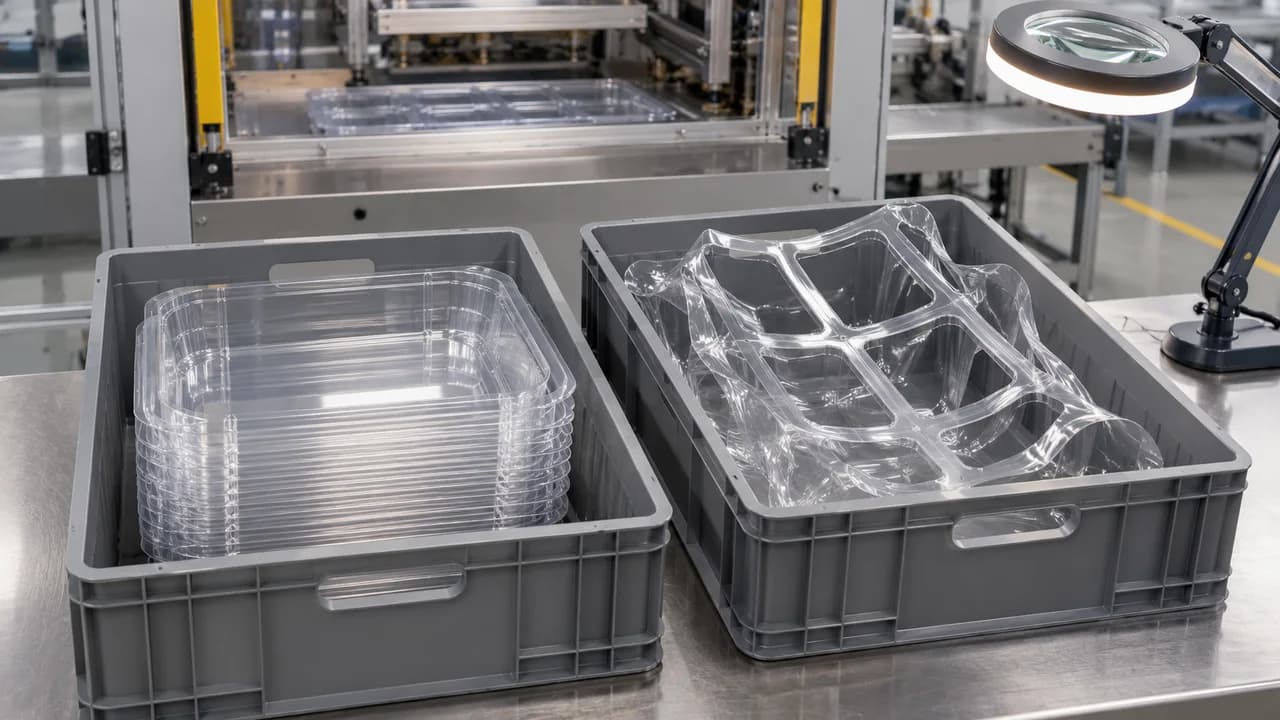
Send identified continuous tray skeleton to a web inlet approved for its width and profile. Collect loose or nested trays separately for a batch-feed trial. Hold unknown, mixed or contaminated lots until the quality team decides their disposition. Approval to granulate a lot and approval to reuse its regrind are separate decisions.
Follow one tray order back to the sheet roll
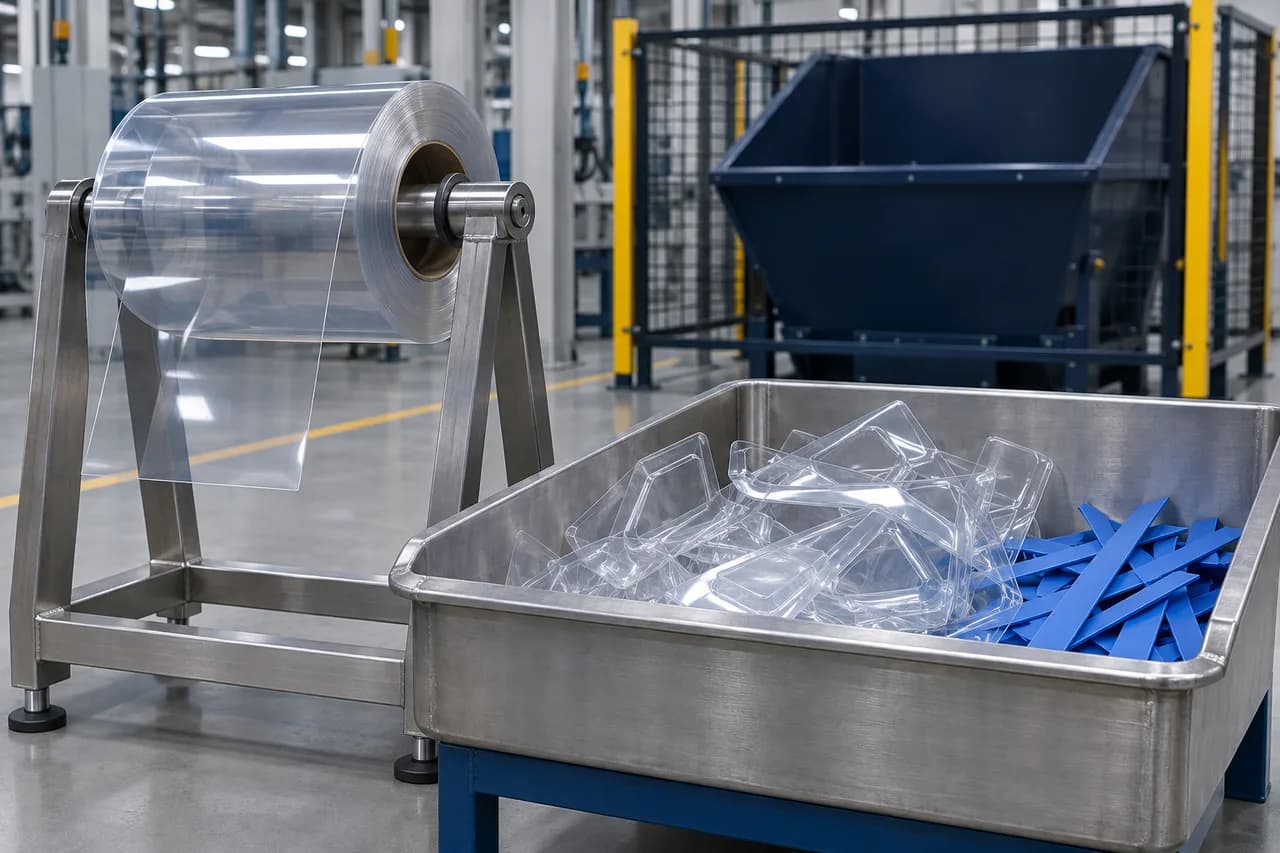
Set out three samples before the quotation meeting: the punched skeleton, a rejected tray as it leaves the stacker and a section of startup sheet. Record the roll identifier and sheet construction for each. A clear tray and a clear web from a different order can look alike while carrying different resin, barrier layers or colour additives.
Ask production where containers wait when a tool changes. A tray on top of a bin cannot identify the material underneath. Give any container with an uncertain changeover boundary a hold tag and retain its lot history until quality assigns a destination.
Measure a stack as the operator actually receives it
For continuous skeleton, sketch the widest repeat and any raised pockets left at startup. For rejects, measure one tray and a representative nested stack in millimetres. Note whether trays separate during normal handling. A stack can arrive as one bulky piece even when a single tray fits the opening.
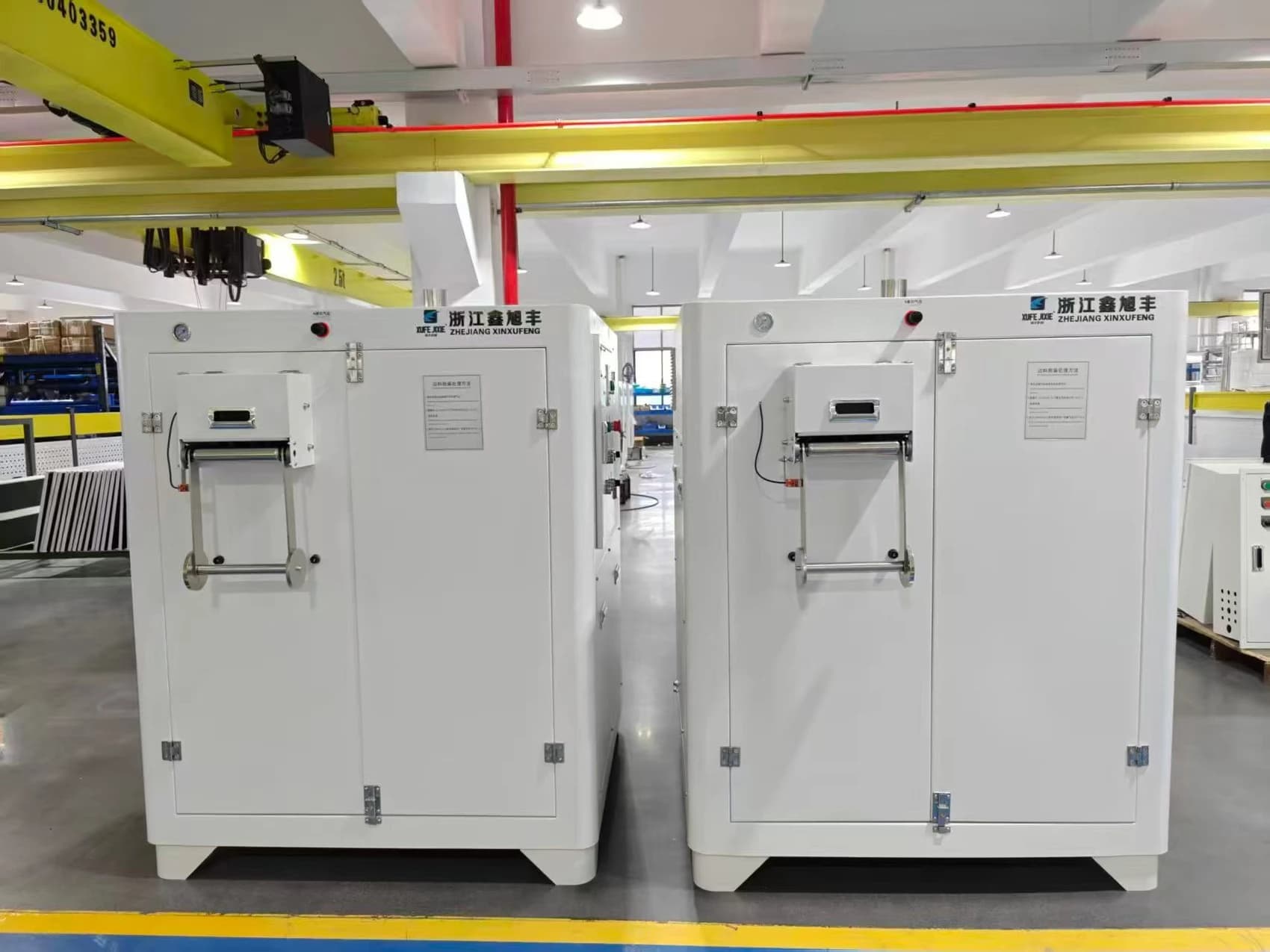
GETECHA describes box collection and metered feeding for faulty thermoformed parts. Rapid illustrates separate arrangements for skeletal web and rolls or rejects. Its September 2026 Fakuma preview also describes combination infeed. Ask which inlet, guard arrangement and loading method the supplier proposes for each sample.
Run a three-bin handover during a real changeover
Assign one labelled container to known web, one to known rejects and one to material awaiting review. Record opening and closing weights for each over a complete changeover. Note who identifies the next roll and when the previous lot clears the discharge and collection path.
If two grades share a collection point, ask the supplier to demonstrate emptying and cleaning between lots. Have quality identify the first acceptable container after the change. Agree the permitted end use with the material owner before returning regrind to sheet production.
Feed path comparison
Identified web
Trim exit → approved web inlet → lot-labelled collector
Check tracking and lot identity through the discharge point.
Nested rejects
Stacker bin → controlled batch feed → separate collector
Trial the largest normal stack and record batch clearance time.
| Scrap condition | Record at collection | Disposition to verify |
|---|---|---|
| Clean continuous skeleton | Roll lot, full width and sheet construction | Trial the guarded web inlet |
| Known nested rejects | Largest stack dimensions and batch mass | Confirm controlled batch feed |
| Untrimmed startup sheet | Maximum raised profile and feed shape | Confirm clearance using a retained sample |
| Mixed or unidentified container | Last known order and boundary of uncertainty | Hold for quality review |
Trial workflow
Identify
Match each sample to its sheet order.
Separate
Keep web, rejects and held material in marked containers.
Trial
Document each approved feed route and collection point.
Release
Get a disposition for each lot from the material owner.
Frequently asked questions
Can clear PET and clear PP trays share a bin?
Keep identified grades separate when the destination requires a single polymer. Confirm material identity from the sheet records before releasing the bin.
Can nested trays use the same inlet as flat skeleton?
Request a trial with the actual stack and obtain confirmation for the proposed inlet. Record the stack height, footprint and loading frequency in the quotation.
What should I send with a vacuum forming granulator enquiry?
Send a full-width web sample, a typical reject stack, the sheet construction, lot handling rules and a sketch showing where both streams will be collected.