
Production scrap · Engineering guide
How to Feed Two Edge Trim Strips on a Sheet Extrusion Line
Measure both trim strips, estimate their combined scrap rate and compare continuous infeed with pre-cut feed for sheet extrusion.
TL;DR · Quick answer
Measure and route the left and right strips separately, then size the granulation and collection system for their combined load. Give the supplier each strip’s width and thickness, resin, operating speed range and take-off position. Compare guarded continuous roller feed with pre-cut feed using a trial that includes both strands, line speed changes and a restart.
Record the left and right strips separately
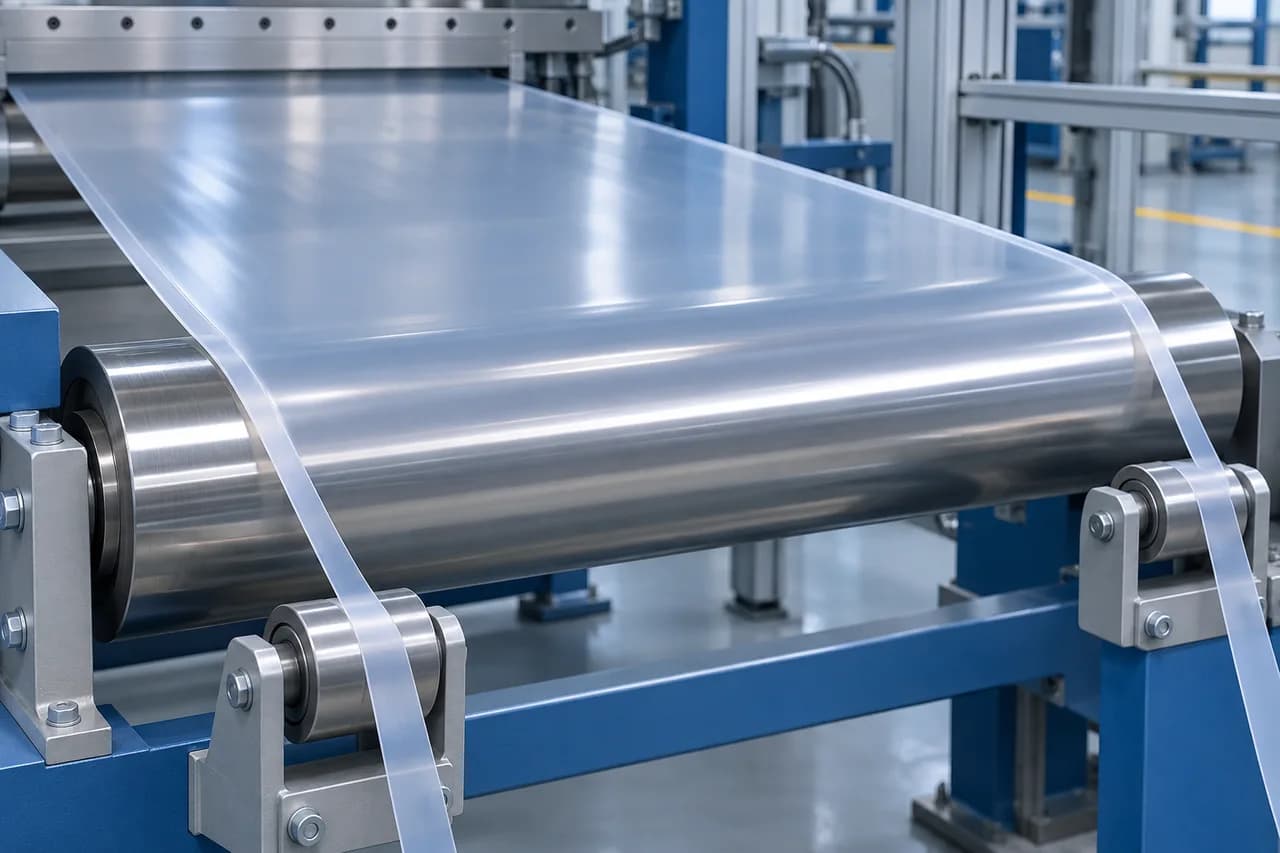
Two edge strips from the same sheet can have different widths or curl after trimming. Label the measurements left and right as viewed in the running direction. Measure width and thickness at the trim take-off and record each strip’s approach to the granulator. Include the direction and height of travel, where the paths would converge and which guides the operator can reach safely.
If one strip stops or goes slack while the other keeps running, note how the line detects that state and where scrap can go during the interruption. Define stop and restart with the equipment suppliers. A combined mass rate is useful for sizing, but it cannot show whether one strand will cross or pull the other off its guide.

Estimate trim load before comparing equipment
For uniform strips with the same density and thickness, multiply the combined width in metres by thickness in metres, line speed in metres per minute and resin density in kg/m³. Multiply by 60 to obtain kg/h. If thickness or resin differs, calculate each strand separately and add the results. Use weighed scrap over a timed production interval when the section varies or the calculated rate disagrees with the floor measurement.
Example only. Two strips that are 15 mm and 20 mm wide, each 0.8 mm thick, at 24 m/min and 900 kg/m³ produce about 36.3 kg/h combined. At 36 m/min with the other inputs unchanged, the estimate rises to about 54.4 kg/h. These are hypothetical line loads, not XF performance figures. Include the actual maximum-width recipe and the maximum-speed recipe when they occur at different operating points.
Choose the feed route around what happens at changeover
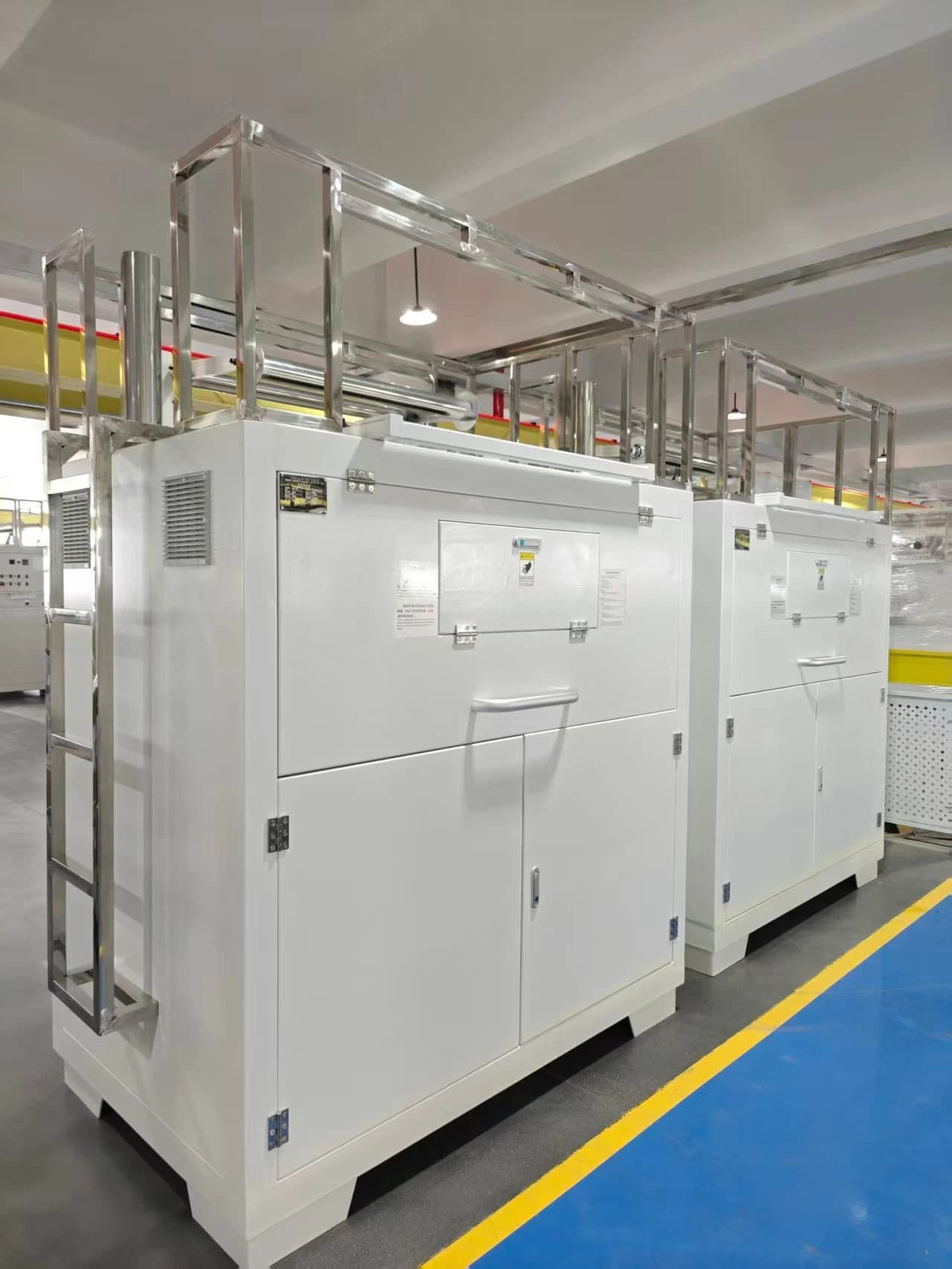
A roller-fed path keeps trim continuous into the granulator, while pre-cut feed turns the strands into shorter pieces upstream. The ZERMA roller-infeed note explains why tension control matters. Conair’s extrusion guide describes air transport for lightweight film ribbons, and Rapid’s Fakuma 2026 announcement describes a guillotine for continuous sheet trim. Each example illustrates a distinct way to handle the material between take-off and granulation.
For an XF inquiry, send both strip profiles and take-off positions, minimum and maximum line speeds, measured scrap loading if available, and a sketch of the preferred layout. During a trial, observe each strand independently, record any crossings or interruptions and verify that collection can handle both strips over the full run.
Feed path comparison
Continuous roller feed
Two take-offs → guided strands → roller infeed
Verify that both strips track independently at low and high speed.
Pre-cut feed
Two take-offs → upstream cutter → conveyed pieces
Verify piece handling, cutter access and room for the transfer equipment.
| Input | What to capture | Why it matters |
|---|---|---|
| Left and right strip dimensions | Width and gauge in mm, recorded separately | Routing and combined scrap load |
| Resin and strip condition | Grade or density, curl, and behavior after take-off | Transport method and trial samples |
| Line speed range | Normal, startup and maximum m/min by recipe | Take-up control and peak load |
| Take-off locations | Height and lateral offsets from each edge | Guide position and available approach |
| Changeover behavior | What happens when one strip breaks or stops | Restart sequence and scrap diversion |
Trial workflow
Label
Measure the left and right trim separately.
Calculate
Estimate the combined kg/h and verify against weighed trim.
Route
Compare continuous and pre-cut feed on the same floor plan.
Trial
Run both strips, then verify speed changes and restart.
Frequently asked questions
Should I add the widths of both strips?
Add them for the mass estimate when both have the same thickness and density. Keep the individual widths and take-off positions in the equipment brief for feed routing.
Is a dual feed arrangement decided by kg/h alone?
No. Compare each strip’s dimensions and tracking behavior, line speed changes, take-off geometry and available space as well as the combined load.
What if the trim curls or varies in thickness?
Send samples from the relevant recipes and weigh the actual trim collected over a timed run. Ask the supplier to include those samples in the proposed feed trial.
References
Related equipment and guides
- Sheet Extrusion Edge Trim
- XF Series
- XF-300
- XF-350 · Dual Station
- How to Feed Thermoforming Skeletal Web into an Inline Granulator