
Production scrap · Engineering guide
How to Feed Thermoforming Skeletal Web into an Inline Granulator
Map the trim exit, size the usable feed path and test web transport before integrating an inline thermoforming granulator.
TL;DR · Quick answer
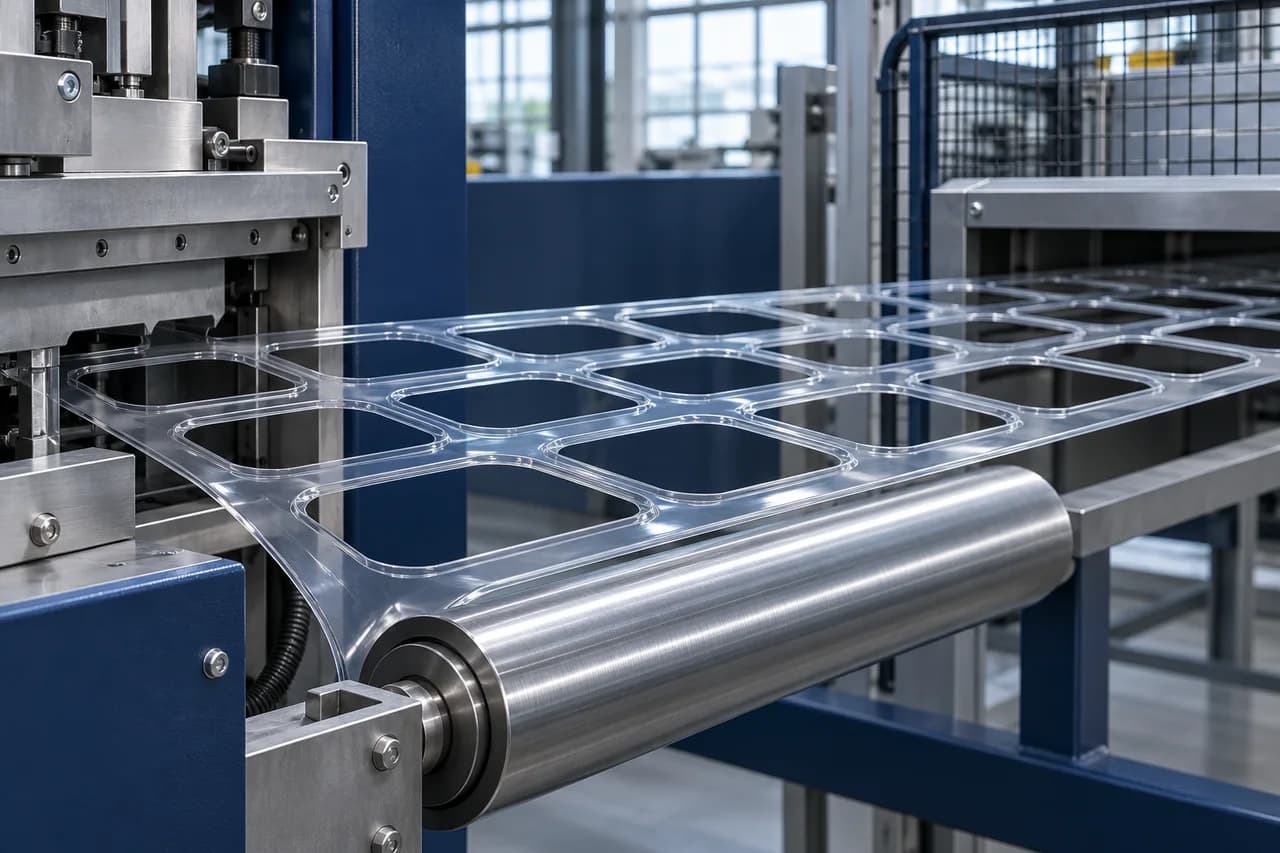
Guide the continuous web from the trim exit into a guarded infeed that can track the actual line speed. Record the maximum flat web width, bridge condition, exit height, feed approach and normal and peak scrap rates. Verify steady running, acceleration and restart with a representative web. Route loose rejects separately unless the specified infeed is designed for them.
Start with the trim exit and the web you actually run
A web can fit the cutting chamber and still be difficult to feed. The bottleneck may be the guarded opening, a turn between machines or a thin bridge that tears when the web accelerates. Sketch the path in plan and side view. Mark the trim exit, machine centerlines, intended infeed and the space the operator needs for access.
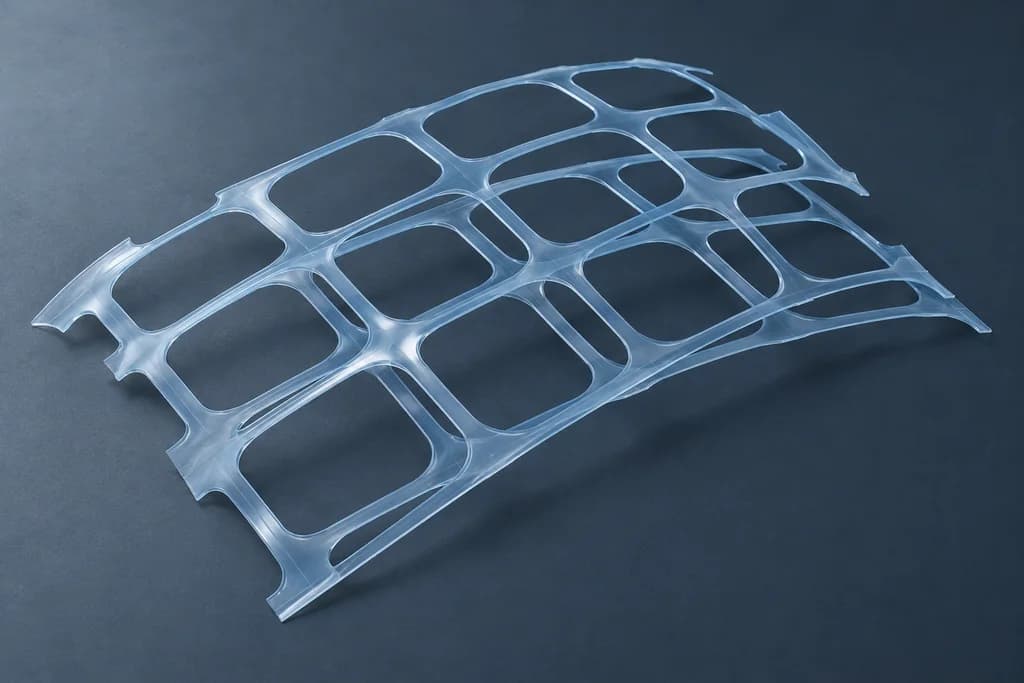
Measure the widest web across its full flat width, including both edge rails. Record the thinnest bridge left between cavities, the resin and sheet gauge, and whether the web curls as it leaves the trim station. Send a full-width sample or a photograph with a scale. A single tray or a handful of regrind cannot show how the web behaves between the exit and inlet.
Check what happens when the line changes speed
Record production speed in m/min and identify whether the trim exit advances continuously or indexes in cycles. Compare the speeds at startup, steady production and deceleration. An infeed that pulls too hard can distort a weak web, while too little take-up can leave a loop that folds or wanders. Ask the line builder and granulator supplier to agree on the feed control and stop/restart behavior before the trial.
Cumberland documents thermoforming granulators for inline use, and ZERMA describes roller control for web and trim. Rapid’s October 2026 Fakuma announcement also highlighted feeding equipment alongside granulators. Those examples describe available approaches. The useful comparison for your line is whether the proposed setup keeps the widest and weakest production webs tracking through speed changes.
Write an acceptance test the supplier can repeat
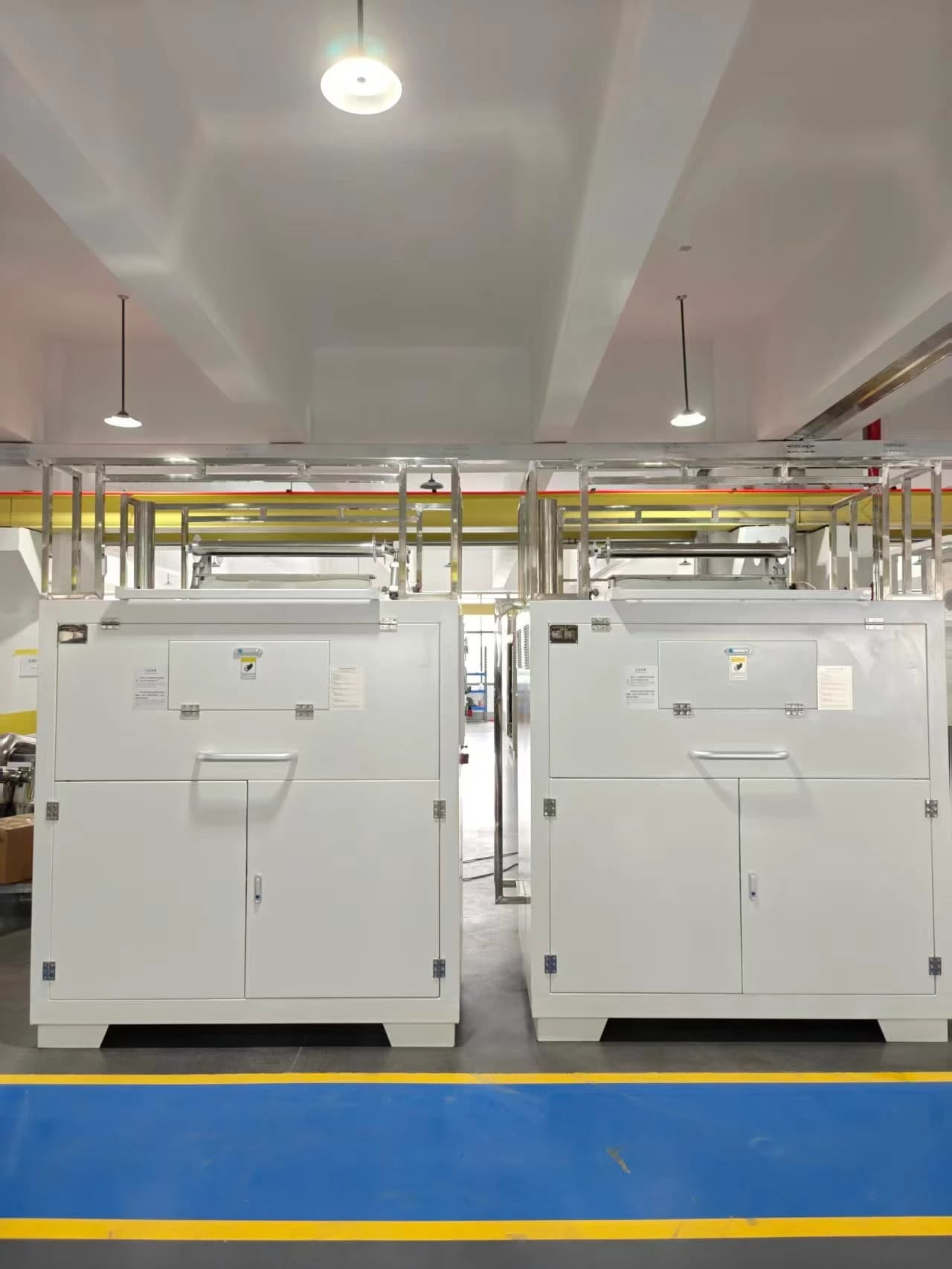
Agree on the resin, web width, gauge, line speed, screen and collection setup to be used in the test. Weigh regrind over a timed interval at stable speed, and record tracking, feed interruptions and restart behavior separately. Repeat with the most difficult web the line is expected to run. Document the conditions next to every measured result so the purchase team can compare proposals on the same basis.
For a CXF-850 review, send the sample and drawing with the trim exit height, available footprint and intended collection point. Use Xufe’s sizing guide for the capacity brief and the product page for catalogue specifications.
Feed path comparison
Continuous skeletal web
Trim exit → guided web infeed → granulator
Check full width, lateral tracking and behavior at restart.
Loose trim rejects
Reject collection → suitable separate feed → granulator
Check the largest part and how material arrives during a batch.
| Record | How to describe it | Decision it supports |
|---|---|---|
| Web width and gauge | Widest flat web in mm, with sheet gauge and resin | Usable feed opening and representative test sample |
| Bridge condition | Narrowest bridges and curl after trim | Whether to test tearing, folding or edge tracking |
| Trim exit geometry | Exit height and offsets in plan and side view | Approach angle and space for guides and access |
| Line motion | Running speed in m/min, indexing and restart pattern | Feed synchronization and test sequence |
| Scrap loading | Normal and peak kg/h, plus any reject batch | Granulation load and collection arrangement |
Trial workflow
Measure
Collect a full-width web sample and mark the exit position.
Map
Draw the guarded route to the infeed and the regrind destination.
Trial
Run the representative web through start, steady production and restart.
Record
Log line conditions, interruptions and weighed output.
Frequently asked questions
Should I measure the tray width or the skeletal web width?
Measure the full flat width of the skeletal web, including both edge rails. Send the maximum across the formats you expect to run.
Can the same inlet take loose thermoformed rejects?
Only when the supplier confirms that feed path for the part geometry and loading pattern. Specify loose rejects separately, even when they will use the same granulator.
Which feed condition should I include in a supplier trial?
Include a representative full-width sample, the weakest expected web and the actual start, steady and restart sequence. Record the material, speed and collection setup with the result.
References
Related equipment and guides
- Thermoforming Scrap Recycling
- CXF Series
- CXF-850
- Thermoforming Granulator Sizing
- How to Feed Two Edge Trim Strips on a Sheet Extrusion Line