
Production scrap · Engineering guide
How to Test PET, PP and PS Sheet Scrap in an Inline Granulator
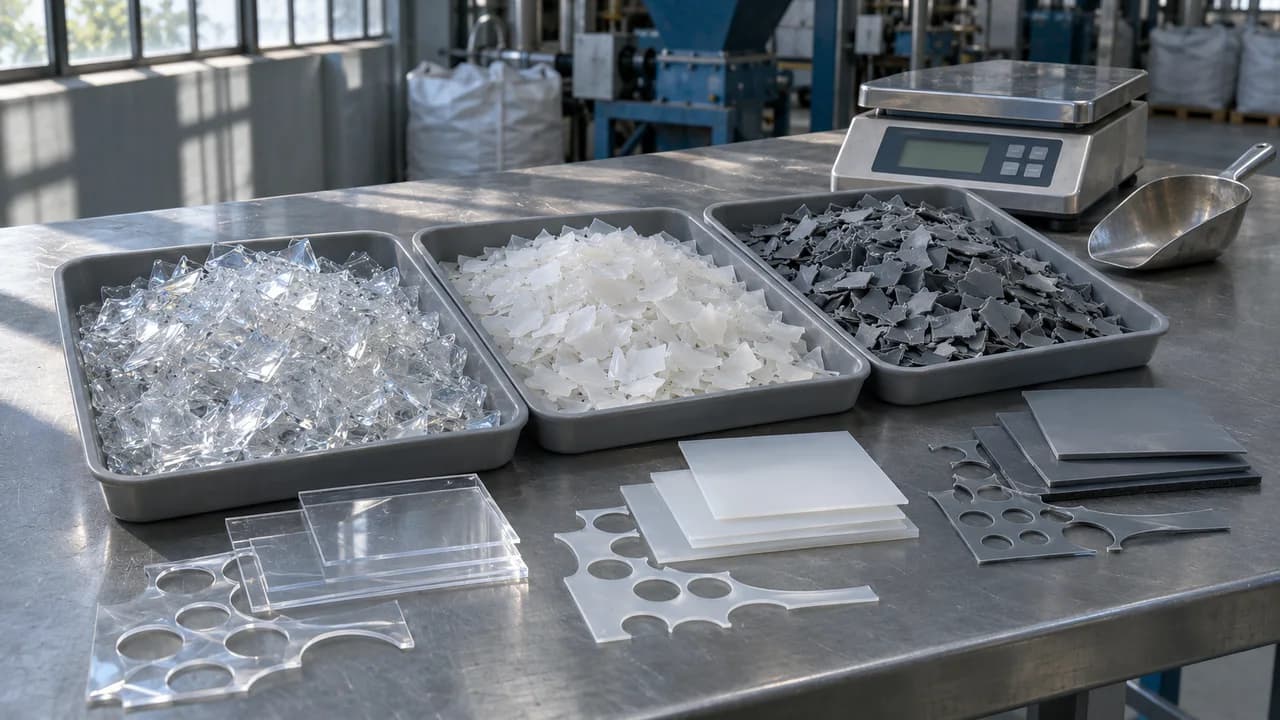
Plan separate PET, PP and PS runs. Use a printable trial matrix for sheet thickness, screen aperture, feed rate and regrind quality.
TL;DR · Quick answer
Run PET, PP and PS separately. For each lot, record sheet thickness and screen aperture in mm, feed method, input and output mass over the same test window, and the output size distribution. Agree on throughput and regrind quality limits before testing. Repeat the most demanding production sample with the intended infeed and discharge.
Build the matrix from actual production lots
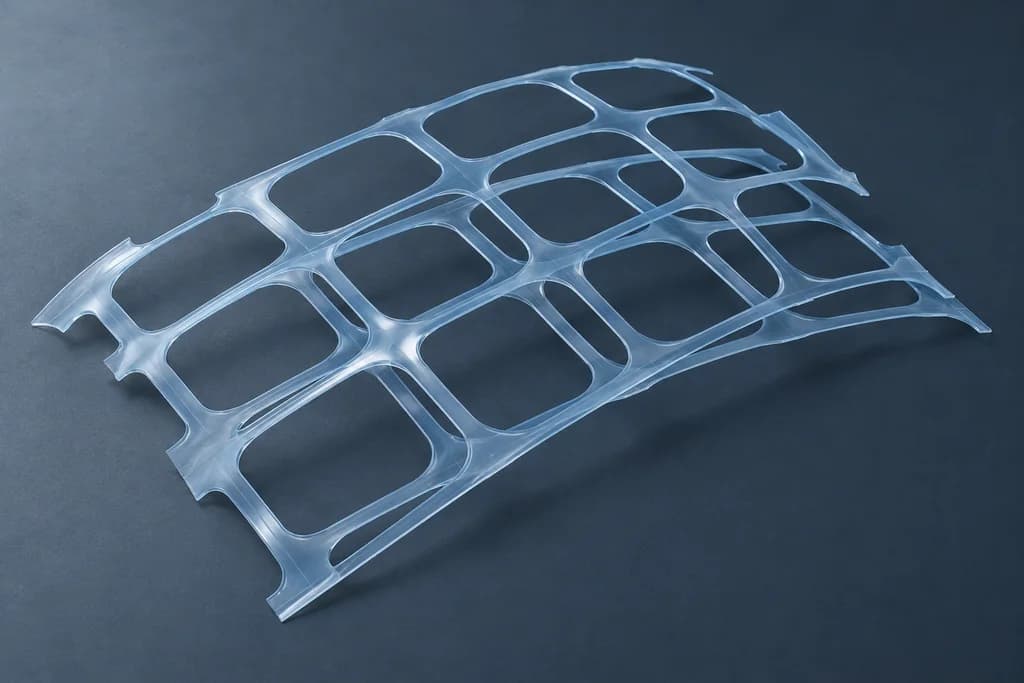
Send labelled sheet scrap, including its resin grade, lot, thickness range and shape. For PET, identify the grade or sheet construction from the supplier record. For PP, preserve the longest or most flexible web in the sample. For PS, note whether it is general purpose or impact modified and include the actual trim profile. Record multilayer or filled sheet as another condition. Appearance alone cannot establish a polymer grade.
Cumberland lists fit and proof of rate among its lab testing goals. A GETECHA installation handles PP and PET in separate lines. In a supplier trial, let each grade and lot keep its own result. Clean the agreed material path between lots and label any transition material separately.
Compare runs under matched conditions
For a screen comparison, keep the lot, sheet geometry, feed method, knife condition and discharge setup fixed. Record screen aperture in mm. Let the line settle, then weigh the material fed and the collected output over a defined window. Record any bypass, carryover, retained material or interruption and identify where the weights were taken. Repeat the limiting recipe at its actual line speed.
Example: 12.0 kg fed over 6 minutes is 120 kg/h of input. If 11.7 kg reaches the collector in that same window, collected output is 117 kg/h. Investigate the 0.3 kg difference before using the result in a quote. This is a hypothetical example. Report restart delays and short interruptions separately from the timed steady run.
Agree on how the downstream team will assess the sample
Collect several increments throughout the run. Combine them as agreed and weigh a representative portion. Using the agreed sieve openings, record mass percentages of fines, accepted material and oversize. Note visible contamination, long flakes and any clumping. Screen aperture describes the installed screen. The measured fractions describe the regrind that left the machine.
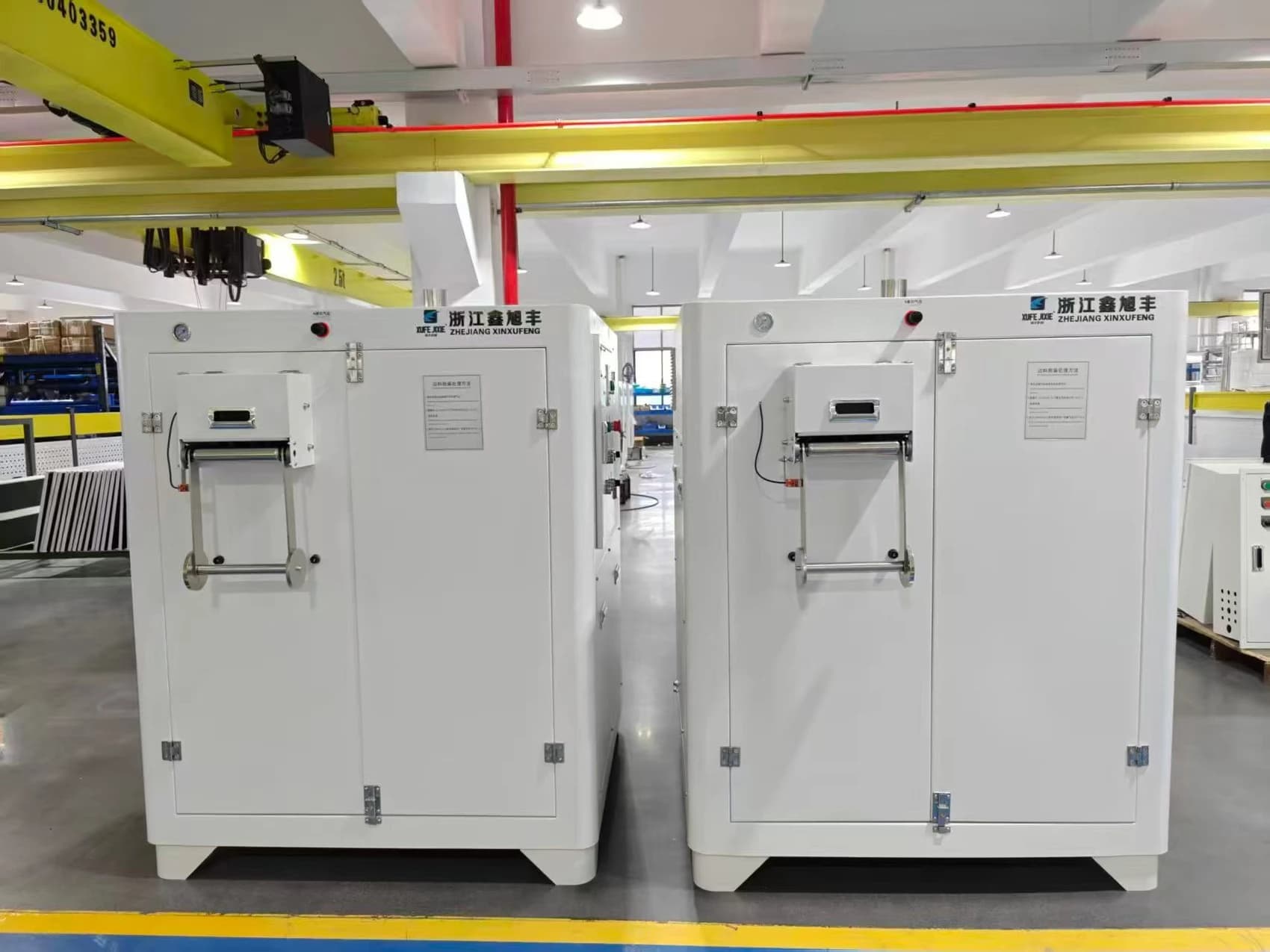
An October 2026 EREMA industry discussion highlighted sharing material quality data between recycling steps. Give your receiving team the trial log and a labelled retained sample so it can check the intended use. For a CXF review, include the actual scrap geometry, proposed feed route, screen and collection arrangement.
Feed path comparison
Separate resin trials
Identify lot → clean feed path → collect one output lot
Repeat by grade and keep each result traceable to its sheet sample.
Screen comparison
Keep one lot → change aperture → repeat the same run
Compare collected kg/h and the measured fines and oversize fractions.
| Resin and lot | Sheet and infeed | Measured output |
|---|---|---|
| PET · lot ___ | Thickness ___ mm · screen ___ mm · feed route ___ · input ___ kg in ___ min | Collected ___ kg · fines ___ % · oversize ___ % · notes ___ |
| PP · lot ___ | Thickness ___ mm · screen ___ mm · feed route ___ · input ___ kg in ___ min | Collected ___ kg · fines ___ % · oversize ___ % · notes ___ |
| PS · lot ___ | Thickness ___ mm · screen ___ mm · feed route ___ · input ___ kg in ___ min | Collected ___ kg · fines ___ % · oversize ___ % · notes ___ |
| Repeat · lot ___ | One change ___ · thickness ___ mm · screen ___ mm · input ___ kg in ___ min | Collected ___ kg · fines ___ % · oversize ___ % · pass or retest ___ |
Trial workflow
Label lots
Keep grade, sheet gauge and scrap form with the sample.
Set limits
Agree on collected rate, size fractions and sampling method.
Weigh the run
Record input, output and interruptions in the same window.
Release or repeat
Return the labelled sample and repeat the limiting condition if needed.
Frequently asked questions
Can one run cover PET, PP and PS?
Run each material separately. Repeat when a change in grade, thickness or scrap geometry can affect feeding or output.
Is the screen aperture the maximum flake length?
An elongated particle can pass through an opening in a favorable orientation. Measure the output fractions and check long flakes separately if they matter downstream.
Can I use the feed weight as the output rate?
Report input rate and collected output rate separately. Check retained material, bypass and timing when they differ.
References
Related equipment and guides
- CXF Series
- Thermoforming Scrap Recycling
- Which Vacuum-Formed Tray Scrap Can Go Back to an Inline Granulator?
- Thermoforming Granulator Sizing